
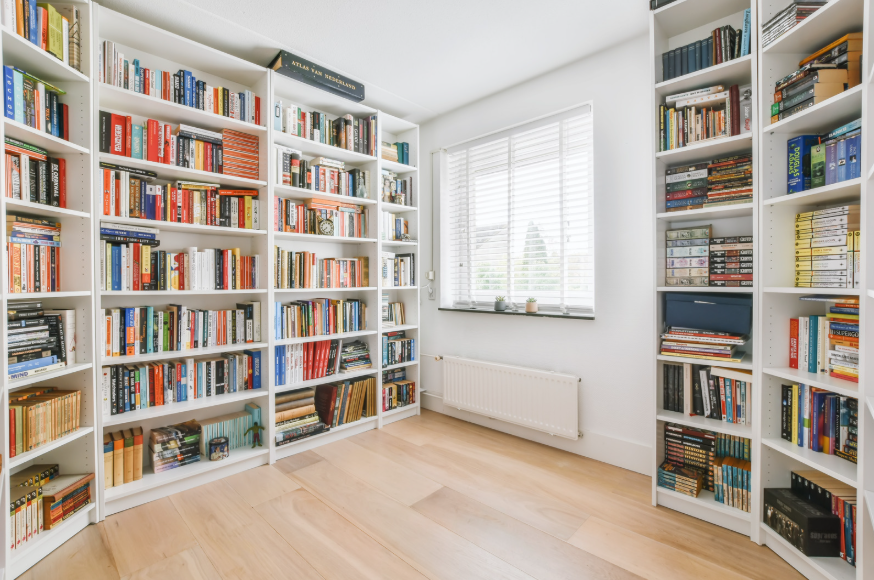
Most built-in bookshelves work well with 10 to 12 inches of usable shelf depth for standard books. Oversized art books, albums, and large display pieces may need 14 to 16 inches. Measure your collection before finalizing dimensions because the right bookcase depth depends on what you intend to store.
Usable depth means the actual space available on the shelf. Overall cabinet depth can be greater because back panels, face frames, doors, and other construction details occupy space. Confirm both measurements on the drawings before fabrication.
How Do You Measure Books for Custom Shelving?
Start with your largest books rather than an average paperback. Measure each book from its spine to the opposite page edge, then consider how you want it positioned.
A useful planning process includes:
- Measuring standard hardcovers and paperbacks.
- Checking oversized books separately.
- Measuring baskets, framed photographs, and decorative objects.
- Allowing room to retrieve items comfortably.
- Identifying anything intended for horizontal stacking.
Avoid choosing deeper shelving simply to accommodate one unusual item. A dedicated section can hold oversized volumes while keeping the rest of the built-in appropriately proportioned.
Is a 12-Inch-Deep Bookcase Always Deep Enough?
Not necessarily. A cabinet described as 12 inches deep may provide less usable space after its back and front details are included.
Ask whether the quoted dimension refers to the overall cabinet, shelf board, or clear storage area. This distinction matters when a book must sit behind doors or within a face frame.
A full-size sample or taped outline can help clarify the finished result. Place your largest intended items within that outline before approving the design. Checking fit early is easier than changing completed cabinetry.
Should Lower Cabinets Be Deeper Than Bookshelves?
They can be. A stepped design combines shallower upper bookshelves with deeper closed storage below. This arrangement can accommodate board games, serving pieces, files, or larger household items without making every shelf equally deep.
However, deeper lower cabinets project farther into the room. Check furniture placement, door swings, heating outlets, and circulation space before deciding.
In a compact room, a consistent shallow depth may be more practical. In a larger living area, deeper bases can provide useful storage and a surface for display.
Does Shelf Depth Prevent Sagging?
Depth is only one part of shelf strength. Material, thickness, unsupported span, edging, attachment, and expected weight all affect performance.
Books create a substantial sustained load. A long shelf should not be specified solely because it looks balanced on an elevation drawing.
Ask your cabinetmaker how book-heavy sections will be supported. Vertical dividers, thicker shelves, reinforced edges, or concealed supports may be appropriate. Adjustable shelving also needs suitable hardware. No single depth or span guarantees that every material will remain straight under every load.
What Should You Confirm Before Installation?
Review depth alongside shelf height, spacing, accessibility, and room proportions. Adjustable sections can accommodate a changing collection, while fixed shelves may contribute to the cabinet’s structure.
For a November or December project, identify books, decorations, and seasonal items that need dedicated storage. Keep frequently used pieces within comfortable reach.
Confirm wall conditions, trim connections, electrical access, and installation arrangements before fabrication. A well-planned built-in should suit both its contents and the room—not simply fill an empty wall.
Design Your Built-In With Bertone Woodworking
Contact Bertone Woodworking to plan bookshelves around your collection, room dimensions, and daily routines. The company creates custom cabinetry, built-in furniture, and storage tailored to individual spaces. Bring measurements, photographs, and examples of your largest books or display pieces. Discuss usable shelf depth, lower-cabinet storage, support requirements, and finishes so your completed built-in feels proportionate, holds what you own, and remains practical as your storage needs evolve.


